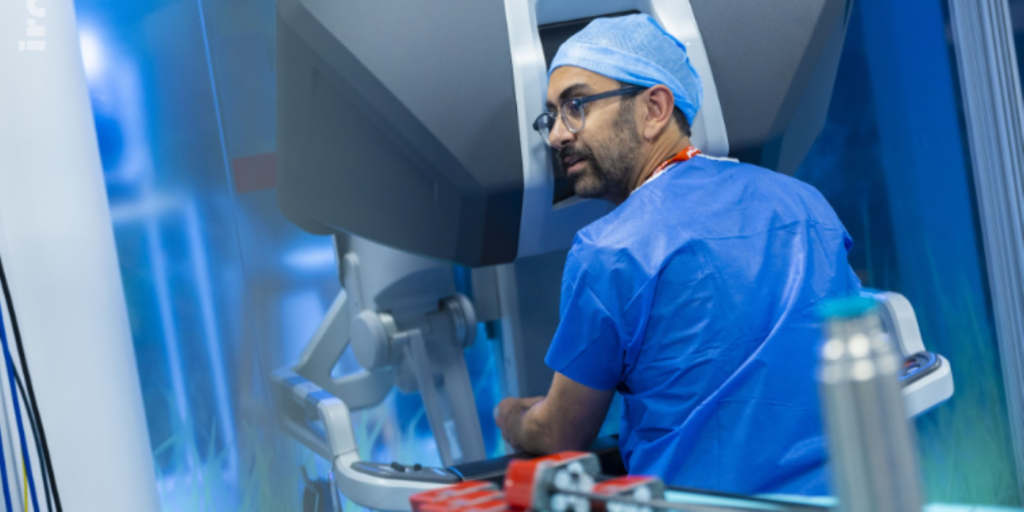
Robot assisted surgery involves a surgeon controlling the robot continuously and guiding every movement; the robot never acts on its own.
‘The surgical robot is a tool rather than an autonomous device,’ explains Associate Professor Taghavi.
‘It is always acting under the control of the surgeon, like a plane and a pilot.’
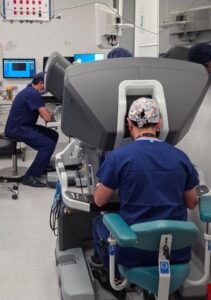
Monash Health’s first robot surgical system
Following the diagnosis of a blocked kidney in ten-year-old Patrick, the patient involved in the surgery, Associate Professor Taghavi offered the option of robot assisted surgery due to the precision of the tool that enhances surgical outcomes and minimises recovery time.
‘The robotic instruments provided a 3D view of the surgical area and allowed for delicate movements, facilitating a more effective dissection and reconstruction of the urinary tract,’ he says.
Promising patient outcome reiterates opportunities of robot assisted surgery
Patrick’s mother, Catherine Keenan, confirms Patrick is now ‘pain-free’ and ‘living his best life again.’
‘Patrick is a child who is always happiest when he is on the move, either playing soccer, running around the house with his siblings or beating his parents at table tennis,’ says Catherine.
She explains that before Patrick underwent surgery, he would often be so uncomfortable he could barely lie down.
The family expresses deep gratitude to the Casey Hospital care team and Monash Health Foundation for making Patrick’s surgery possible.
‘We feel very fortunate as a family for Patrick to have been able to receive such ground-breaking treatment and excellent care,’ says Catherine.
‘We are immensely grateful to the Monash Health Foundation…and everyone involved,’ Catherine.
Robotics could transform the future of surgical practice
Associate Professor Taghavi first realised the opportunities afforded by robot assisted surgery when he visited Hôpital Necker-Enfants Malades in Paris.
‘The hospital has the most advanced paediatric robotic program in Europe,’ says Associate Professor Taghavi. ‘I witnessed first-hand the benefits and possibilities of this approach.’
He has since attended numerous courses in a bid to upskill in the field of robot assisted surgery, such as IRCAD’s Robotic Pediatric Surgery and Urology Advanced Course in Strasbourg, France, and completed lab training with some of the best paediatric robotic surgeons in the world.
Benefits for the patient and the surgeon
Robot assisted surgery has a slew of benefits, including reduced post-operative pain, shorter hospital stays, quicker recovery, and improved long-term outcomes.
‘Robot assisted surgery provides enhanced precision in delicate procedures and promises the ability to perform minimally-invasive surgery where otherwise this would be impossible in children,’ Associate Professor Taghavi.
The paediatric robotics program at Monash Health is in its first phase and is performing standard procedures, including pyeloplasty, (unblocking the kidney), nephrectomy, (kidney removal) heminephrectomy, (partial removal of the kidney) ureteric reimplantation, (replumbing urine tube into bladder) and other pelvic surgeries.
Inviting wide collaboration to advance robotics goals
Monash Health Hospital has established a national paediatric robotic surgery prospective database providing a mechanism for data collection and outcomes across Australia and New Zealand. This will help support dissemination of expertise and act as a quality assurance and research tool.
Associate Professor Taghavi and his team recently presented at a bi-national conference, and three centres across Australia have expressed an interest in contributing cases and establishing robotics programs. A care pathway has also been established at Cabrini Health.
‘We anticipate caring for up to 12 patients annually in the initial phase of the program, with the potential to increase this number as the program expands,’ says Associate Professor Taghavi.
The support of the Monash Health Foundation, coupled with the time and dedication of Associate Professor Taghavi’s robotic mentor Professor Homi Zargar, has played an integral role in developing the robotic program at Monash Health.
‘There were no paediatric surgeons in Australasia that were able to supervise the surgery, but the incredible support of adult urology colleagues has been invaluable,’ says Associate Professor Taghavi.
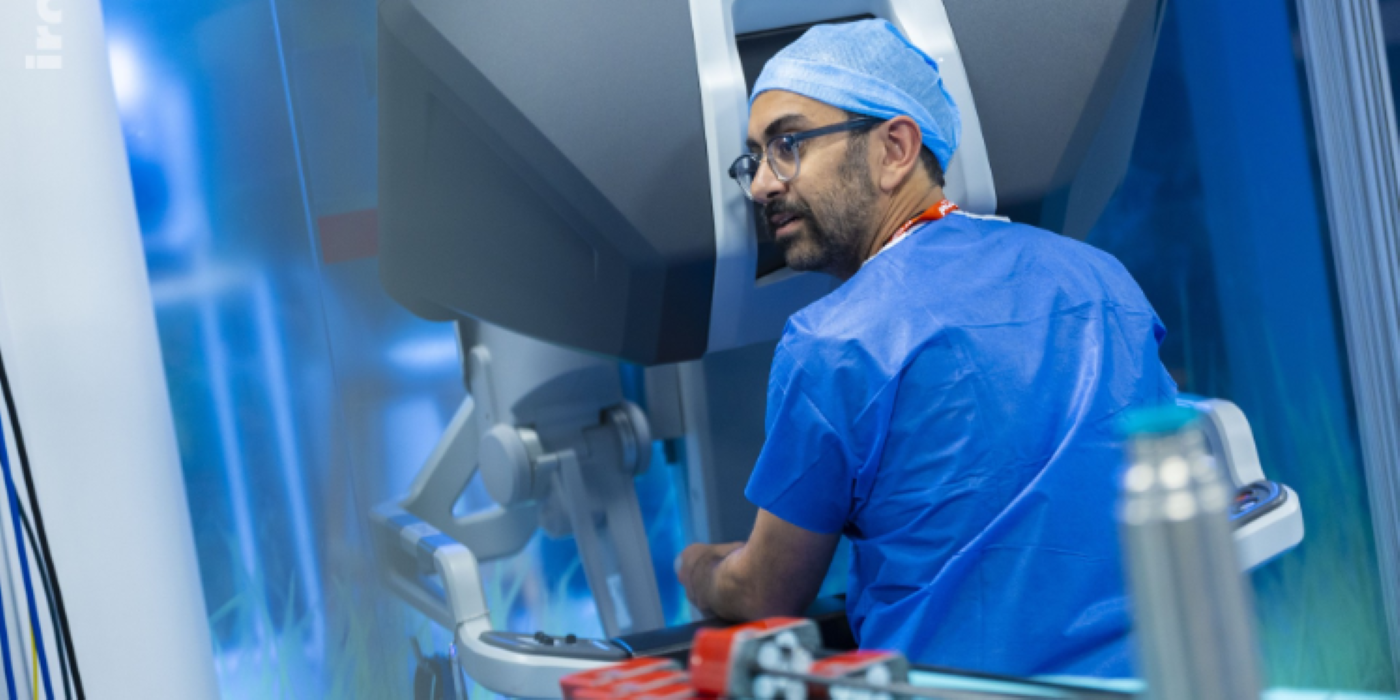
Featured Image: Associate Professor Kiarash Taghavi at IRCAD’s Robotic Pediatric Surgery and Urology Advanced Course in Strasbourg, France.