
Media: Stillbirth prevention program championed by Monash Health saving lives

The first analysis of Australia’s national stillbirth prevention program, the Safer Baby Bundle, has found it has saved lives.
Three linked studies, undertaken by Monash Health, the Hudson Institute of Medical Research, and Monash University, found a 20 per cent reduction in stillbirth at Victorian hospitals that implemented the bundle. Dr Keeth Mayakaduwage, the lead author of the series, is an obstetrics and gynaecology resident medical officer at Monash Health. He undertook this work under the supervision of senior author A/Prof Miranda Davies-Tuck, Research Group Head of Epidemiology and Clinical Trials, and NHMRC Centre of Research Excellence in Stillbirth (Stillbirth CRE) investigators.

In Australia, more than 6 babies are stillborn every day and a further 2 die within the first 28 days of life. Developed by the Stillbirth CRE, the Safer Baby Bundle is a set of evidence-based clinical guidelines and educational resources targeted at clinicians and pregnant women to assist in preventing stillbirth.

As reported by the ABC, Herald Sun and 10 News, the study series examined whether uptake of the Safer Baby Bundle in Victoria was associated with reduced stillbirth and perinatal mortality, changes in the causes of perinatal death, and equitable benefits across population groups.

‘The Safer Baby Bundle is a nationally funded bundle of care aiming to reduce stillbirth at later pregnancy. The bundle aims to educate pregnant women and streamline the clinical care that’s provided across five different elements,’ Dr Mayakaduwage told ABC News.
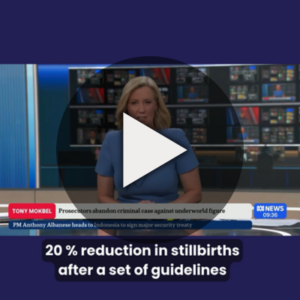
Watch the clip of Dr Keeth Mayakaduwage on ABC News
Watch Dr Keeth Mayakaduwage speaking on ABC News

Five key actions

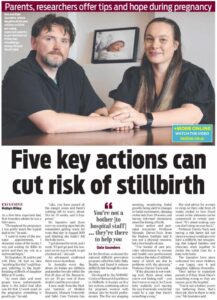
Rob and Dale Saunders, whose daughter, Billie, was stillborn in 2019, appeared in the Herald Sun to encourage expectants to seek medical advice if something feels wrong during pregnancy.

The first evaluation of the Safer Baby Bundle in Victoria found that its implementation was associated with a reduction in stillbirth risk through five key evidence-based practices for pregnant women and clinicians:  

  • smoking cessation in pregnancy  
  • monitoring of fetal growth 
  • awareness of, and timely response to, changes in fetal movements 
  • side-sleeping from 28 weeks’ gestation 
  • informed discussions about the timing of birth 

Participating Victorian maternity services saw a reduction in stillbirth and a statistically significant reduction in overall perinatal mortality. 

Reductions were also seen in specific causes of stillbirth. ‘Stillbirths due to unexplained causes and specific perinatal conditions declined in Safer Baby Bundle sites, suggesting improvements in antenatal detection and management of fetal risk,’ said Dr Mayakaduwage. 

Importantly, Dr Mayakaduwage notes the Safer Baby Bundle rollout did not lead to any unanticipated complications. 

‘We saw a reduction in stillbirth…without an increase in unintended harms such as the caesarean section, induction of labour, preterm birth, or neonatal intensive care admission,’ Dr Keeth Mayakaduwage.

Inequitable impact  

The study’s findings also suggest the need to develop culturally appropriate stillbirth reduction measures, as the Safer Baby Bundle did not improve outcomes among several migrant groups, with perinatal mortality among Indigenous women increasing during the study period.

Certain demographic groups, including migrant and Indigenous populations, experience disproportionately higher risks of stillbirth. Our findings highlight that universal programs may not benefit all populations equally if they are not culturally tailored,’ said A/Prof Davies-Tuck.  

The Stillbirth CRE has since adapted the Safer Baby Bundle for Indigenous women and migrant and refugee communities in AustraliaA/Prof Davies-Tuck led the cultural adaptation of the Safer Baby Bundle for migrant and refugee communities through a co-design process with members of those communities. 

Dr Mayakaduwage noted that this evaluation was conducted prior to the rollout of the culturally adapted bundles, and ongoing evaluations will be critical to determine whether these adaptations improve outcomes and equity for these groups. 

The three studies are now published in The Australian and New Zealand Journal of Obstetrics and Gynaecology:

  1. Reducing Perinatal Mortality in Victoria, Australia: Early Insights From the Safer Baby Bundle Implementation 
  2. Impacts on Causes of Perinatal Death After Safer Baby Bundle Implementation in Victoria, Australia
  3. Reach and Impact of the Safer Baby Bundle Among Groups Disproportionately Affected by Stillbirth in Victoria, Australia 

Lead image: L-R: Dr Keeth Mayakaduwage, the lead author of the series, and Associate Professor Miranda Davies-Tuck, the study’s supervisor and senior author.

Read more

Foundation, Research and Innovation

Victorian-first paediatric robot-assisted surgery at Monash Health

Media, Research and Innovation

Media: Stillbirth prevention program championed by Monash Health saving lives

Two smiling health workers standing in a bright white hospital corridor.
Public Health and Community

Managing diabetes: 5 healthy habits that you can start today