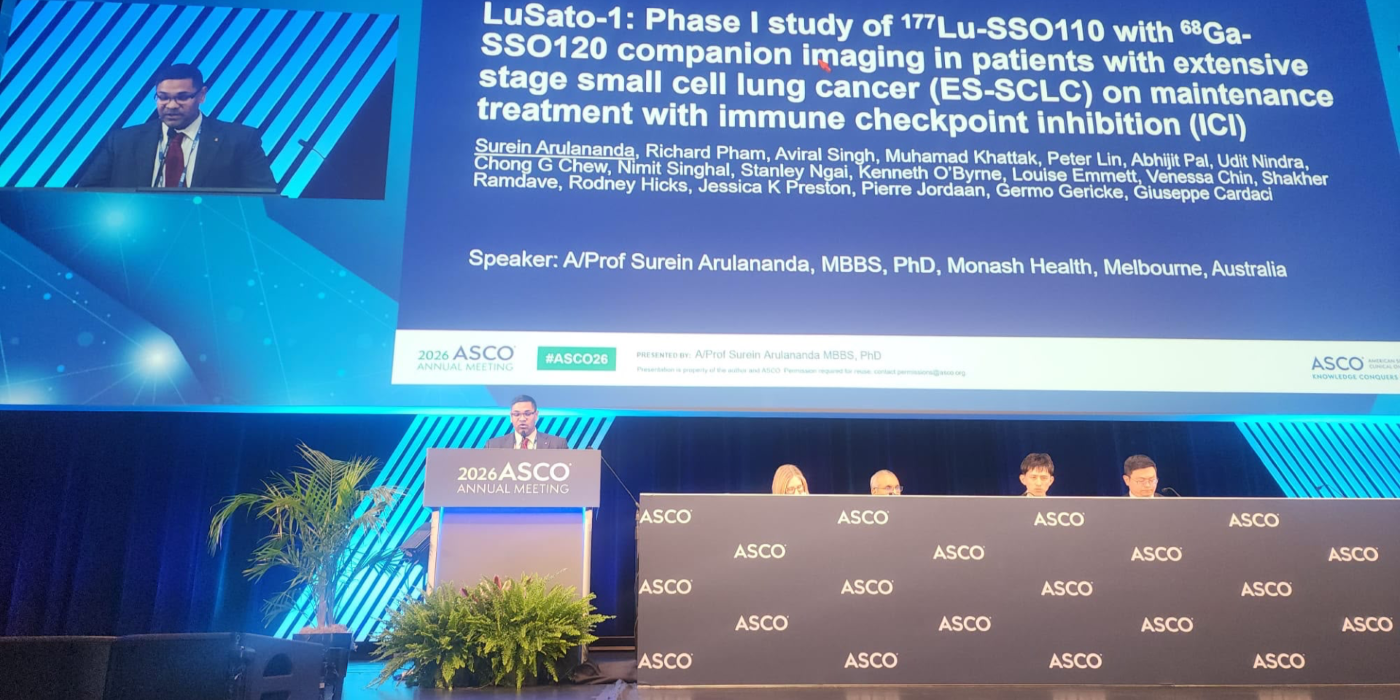
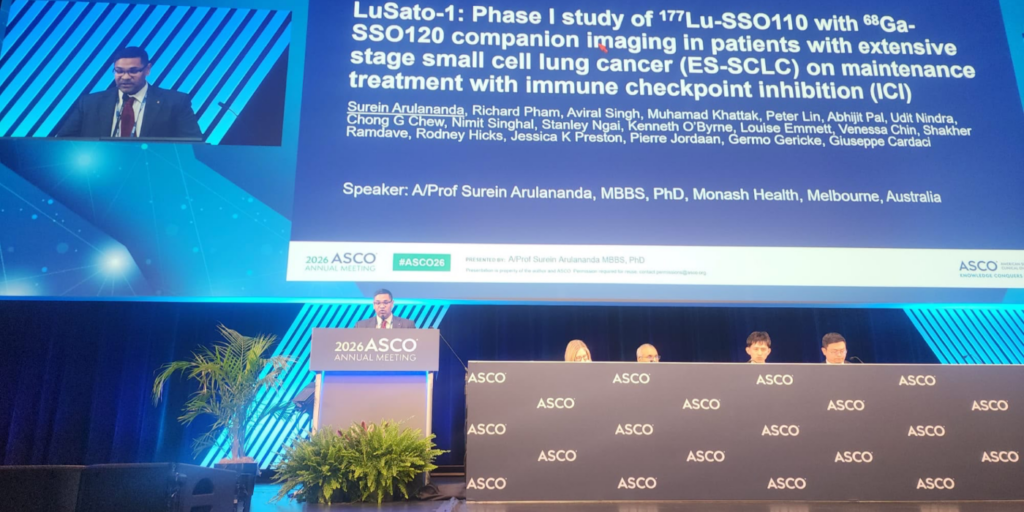
Associate Professor Surein Arulananda, Deputy Director of Medical Oncology and Lung Cancer Trials Lead presented findings from the LuSato-1 study at the 2026 Annual Meeting of the American Society of Clinical Oncology (ASCO) in the United States on 31 May 2026.
The trial is investigating a new treatment approach for extensive-stage small cell lung cancer, a disease known for its aggression and historically poor survival rates.
The treatment combines a targeted radiopharmaceutical therapy, 177Lu-SSO110, with maintenance immunotherapy.
Early results showed promising anti-tumour activity and manageable side effects.
Associate Professor Arulananda said the findings reflect a turning point for patients with this disease.
‘Small cell lung cancer remains one of the most aggressive cancers, with historically high mortality rates and limited treatment options. However, we are now seeing an avalanche of novel therapies emerge, including radiopharmaceutical treatments, T cell engager therapies and antibody drug conjugates, which are beginning to meaningfully improve both outcomes and quality of life for patients.’
Monash Health treats more lung cancer patients than any other health service in Victoria.
‘With that comes a responsibility to ensure our patients have access to the very best therapies and clinical trials available,’ said Associate Professor Arulananda.
LuSato-1 is a multidisciplinary team effort that brings together Monash Health’s medical oncology, nuclear medicine and clinical research units.
The nuclear medicine component is led by Dr Shakher Ramdave, a specialist in theranostics, a field that pairs imaging technology with precision-targeted treatment to find and destroy cancer cells.
‘Studies such as LuSato-1 reflect the strength of our multidisciplinary collaboration and our commitment to bringing cutting-edge treatments to patients as early as possible,’ Associate Professor Arulananda said.
The ASCO presentation is a major milestone for Monash Health, reinforcing its global reputation in theranostics and lung cancer research.
To receive more stories like this direct to your inbox, subscribe to Research Matters, Monash Health’s quarterly research newsletter.